
How to Check Criminal History in Lone Star
A Lone Star records check should proceed from the event document outward. A citation, jail property receipt, bond paper, or incident card may identify the officer’s agency and the court or cause number. Without that clue, ask city administration only who currently serves as records officer and municipal clerk, then confirm custody and county filings through Morris County.
- Read the paperwork for the arresting or citing agency, event date, location, charge description, and cause or incident number.
- Ask Lone Star city administration which office holds a city-created police report or fine-only municipal citation before submitting a request.
- For transport and present county-jail custody, call Morris County Sheriff/Jail at (903) 645-2232 and use VINELink for status notification.
- After prosecutor intake, check the County Clerk for a Class A or B misdemeanor or District Clerk for a felony filing.
- Use Texas DPS CCH only for later reported public convictions and deferred adjudications, not as a live Lone Star arrest log.
This order keeps each question with the office able to answer it. It also leaves time for a recent arrest to move from intake to a charging decision.
No Lone Star Records Portal
No current accessible official police-records page, municipal defendant search, staff directory, arrest blotter, crime dashboard, or mobile app was verified for Lone Star. The city homepage capture also failed during research. That does not prove the city lacks internal files. No official lookup should advertise a button or screen that the source set could not confirm.
The sound fallback is procedural. Contact city administration to identify the current municipal clerk and records custodian. Describe the date, place, and type of event without assuming city police handled it. If redirected, record the office name and then send a written Texas Public Information Act request to the actual law-enforcement creator. A search result for another place or a private directory is not a substitute for that confirmation.
Recheck the current Lone Star contact before travel because the official web presence was not reliably accessible during research. Telephone and counter directions are safer than an unverified email or street address. Once Lone Star confirms the office, keep the name of the staff member, the date, and the specific submission instructions with the request log.
The Lone Star Police Department
The research did not verify a current official Lone Star police records page or named records officer. Do not borrow contact details from an agency with a similar name. Begin with Lone Star city administration and ask two narrow questions: which agency created the requested report, and where the city accepts a written request for a record it holds. This avoids sending personal details to the wrong office.
A police incident report can contain the event narrative, location, officer action, evidence, involved names, and initial offense. Active-case information, juvenile material, victim details, medical data, and protected identifiers may be withheld or redacted. If a sheriff deputy or DPS trooper handled the event, the report remains with that agency even when the street address says Lone Star.
Identify Lone Star Record Custody
Location and custody are different facts. Lone Star’s industrial sites, reservoir area, and state highways may bring city officers, Morris County deputies, constables, or Texas DPS into the same geographic area. A highway arrest by a trooper produces a DPS report. Booking in Morris County does not transfer ownership of that incident report to the sheriff.
When no paperwork survives, give each likely office the event date, street or landmark, and involved name, then ask only whether it is the custodian. Once confirmed, request an existing item such as the basic offense report, arrest report, booking sheet, or citation record. Do not ask an office to create a new history or answer a legal question.
That custodian-first method is the key Lone Star criminal record skill. It limits delay and preserves a clean trail if an office redirects the request.
Arrests and Bookings in Lone Star
An arrest connected to Lone Star can create four records at different times. The arresting agency prepares its report. Morris County Jail creates booking and custody data after transport. A magistrate produces warnings, probable-cause, and bond papers. A prosecutor and clerk create a court file only if charges are accepted and filed. The arrest report’s first charge can differ from the eventual charging instrument.
Morris County publishes no verified public jail roster, booking log, or mugshot gallery. For current custody, use the official Morris County Sheriff page, call (903) 645-2232, and follow its VINELink route. Request a booking sheet in writing when more detail is needed. A booking entry proves processing and custody, not guilt or final case outcome.
Lone Star Custody After Booking
VINELink serves a focused role after a Lone Star arrest. It can support custody-status checks and notifications when a person enters, leaves, or transfers within participating systems. It is not a complete criminal history, and it does not replace the creating agency’s report or a clerk’s case file.
If the person is no longer in Morris County Jail, check whether release or transfer information is available, then move to the appropriate court clerk. A sentenced person transferred to state prison belongs in the TDCJ Online Inmate Search, not the county custody channel. County and state layers receive fuller treatment in the Morris County arrest history resource.
Lone Star Municipal Court Records
No current official Lone Star municipal court portal or clerk directory was accessible during research. City administration should confirm the present clerk and record-request channel. A municipal court generally handles its own ordinance and fine-only matters within city jurisdiction. It does not hold every arrest that occurred inside Lone Star.
| Court Name | Lone Star municipal court or clerk, current contact to be confirmed through city administration |
|---|---|
| Case Types Heard | City ordinance and fine-only municipal matters within the court’s jurisdiction |
| Case Lookup Channel | Telephone or counter instructions after confirming the current municipal clerk; no verified public portal |
| What the Docket Shows | Citation, plea, settings, warrant or compliance events, and disposition when recorded |
| Copies & Fees | Availability and any charge must be confirmed with the current clerk |
A Class A or B misdemeanor instead belongs with the Morris County Clerk after filing. A felony belongs with the District Clerk. Fine-only state citations issued by a county or state officer may route to the justice court rather than Lone Star’s municipal clerk.
The distinction can change what a search shows. A Lone Star ordinance citation may stay municipal and never appear in Suite D or Suite J. A sheriff or trooper citation may route elsewhere even when the event occurred inside Lone Star. Confirm the issuing agency and court printed on the citation before choosing a clerk.
Lone Star Records Geography
Lone Star’s history is tied to the former Lone Star Steel complex, Ellison Creek Reservoir, and Lone Star Lake. That local setting helps explain jurisdiction, but it cannot support a claim about crime rates. Industrial property, reservoir areas, and state highways may fall within different patrol and reporting routes. The badge and agency printed on the document are more useful than the mailing city.
The official Census Bureau Morris County profile provides geographic and population context for the small county that contains Lone Star.
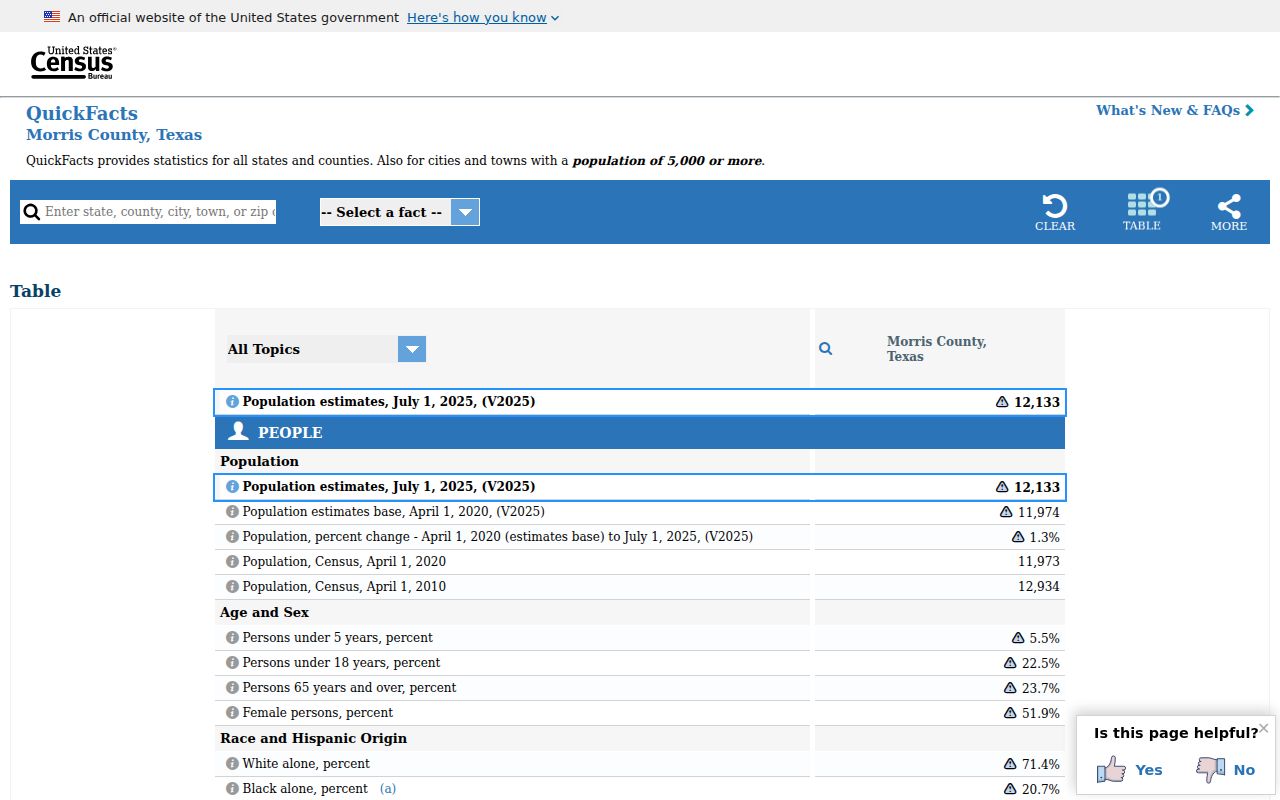
The county view helps place Lone Star, but it should never be used to assign countywide crime counts to the city.
Where Lone Star Records End Up
A Lone Star city report stays with its creator. A municipal citation can remain with the city clerk. If an arrest leads to an accepted Class A or B misdemeanor, the Morris County Clerk keeps the filed case. The District Clerk keeps felony files for the 76th and 276th District Courts. Qualifying fingerprints, charges, dispositions, and custody or supervision events can then be reported to Texas DPS CCH.
Record flow: Lone Star law enforcement › Morris County Courts › Texas Department of Public Safety
This line is not automatic for every incident. A city ordinance case may never reach the county portal. A felony booking can precede an indictment. The public DPS name product appears later and is limited to reported convictions and deferred adjudications.
Missing Lone Star Court Filings
A recent Lone Star arrest may appear in custody records before a clerk has a case. Prosecutor intake takes time, an initial allegation may change, or no charge may be filed. Name spelling and a portal’s image limits can also hide an existing file. Do not treat an empty search as proof that the event never occurred.
Allow for intake, then call the correct clerk with the full name, approximate filing or arrest date, and cause number if known. The County Clerk at (903) 645-3911 handles Class A and B misdemeanors. The District Clerk at (903) 645-2321 handles felonies. Both clerk pages publish Public/Public portal credentials, but a call or counter check remains the fallback for an older or image-locked record.
The official county contact page shows the offices serving Lone Star residents.
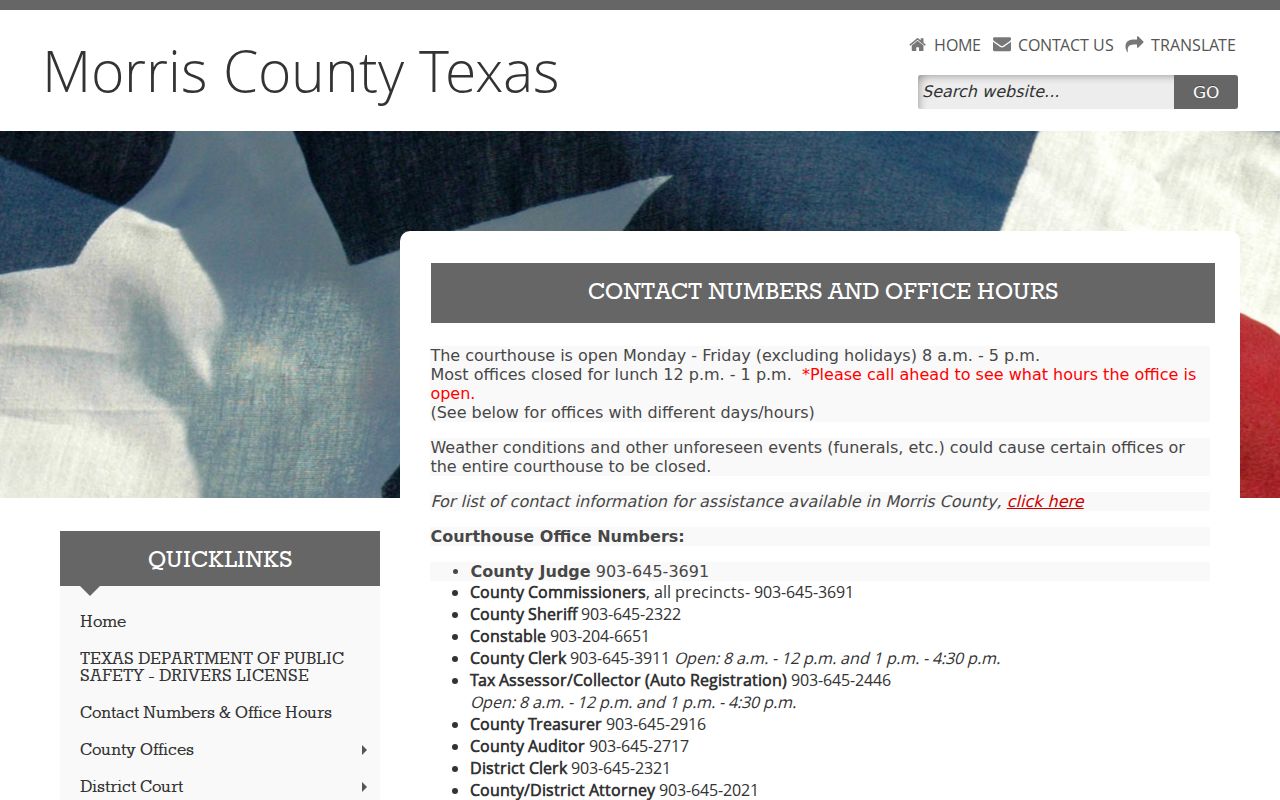
Those county offices authenticate filed cases; they do not replace the agency that wrote the Lone Star incident report.
Lone Star Criminal Record Counts
No stable official city crime table with sufficiently clear current coverage was captured for Lone Star. County population, jail calls, or a list of cases cannot be turned into a city crime rate. The steel industry and highway network also do not prove anything about offenses or people.
For an official comparison, use Texas DPS Crime in Texas or FBI Crime Data Explorer and select the exact Lone Star agency and year. Check what the agency reported and whether the year is complete. Do not substitute Morris County totals. If the agency label is unclear, confirm it before publishing a number. That discipline matters in a small city where one wrong jurisdiction can distort the result.
Crime statistics also answer a different question from a Lone Star criminal record request. Aggregate counts do not identify the custodian of one incident, prove that a named person was involved, or show the outcome of a court case. Use them only for broad context after checking coverage.
Public Access Rules
Lone Star executive-agency records remain subject to the Texas Public Information Act. A request must be written to trigger the Act. The government body cannot require a reason for wanting the record, though it may ask for clarification of a broad description. It may redact confidential information or seek an Attorney General ruling. Court records follow clerk and judicial-access procedures, so a police request cannot obtain a clerk’s filed judgment.
Key Statutes:
Texas Government Code Chapter 552 provides access to public information while preserving statutory exceptions.
Government Code Sections 411.083 and 411.135 govern state criminal-history confidentiality and the DPS public product.
Code of Criminal Procedure Chapter 55A sets Texas expunction rules for qualifying records.
Keep a log of the office, delivery proof, exact description, incident or cause number, cost ceiling, and response. If redirected, confirm the named custodian before resending sensitive details.