
How to Check Criminal History in Morris County
No single office holds a complete Morris County criminal history. Begin with the type of event. The Morris County District Clerk keeps felony files from the 76th and 276th District Courts. The Morris County Clerk keeps Class A and B misdemeanor cases. Each clerk page links to the local public-access portal and publishes the username Public and password Public. Fine-only municipal or justice court matters stay with the court that issued the citation.
For a sound match, gather the full name, likely filing year, date of birth when lawfully available, and any cause, incident, or booking number. Spelling matters. A person may also appear under an alias or changed name. Then use this order:
- Search the correct Morris County clerk portal for a filed felony or Class A or B misdemeanor.
- Call or visit the clerk when images are locked, an older file is absent, or a certified copy is needed.
- For current custody, call the Morris County Sheriff and Jail and use the sheriff's VINELink route.
- Ask the arresting agency in writing for its incident, arrest, or booking record under the Texas Public Information Act.
- Use the Texas DPS name search for reported statewide convictions and deferred adjudications, or FAST fingerprints to review your own identity-matched record.
Each step answers a different question. A Morris County court file is the best source for the filed charge and result. A sheriff record describes local custody and the first allegation. DPS compiles later events sent by participating agencies.
Four Morris County Record Custodians
Morris County criminal records are split by function. Most county justice counters sit close together, but legal custody of the documents still differs. Sending a broad request to the wrong office can add delay because a sheriff cannot certify a judgment and a clerk does not own an officer's unfiled report.
District Clerk
500 Broadnax St., Suite J
Daingerfield, TX 75638
(903) 645-2321
Felony files and district court orders
County Clerk
500 Broadnax St., Suite D
Daingerfield, TX 75638
(903) 645-3911
Class A and B misdemeanor files
Sheriff and Jail
502 Union St.
Daingerfield, TX 75638
(903) 645-2232
Booking custody and sheriff reports
Morris County CSCD
500 Broadnax St.
Daingerfield, TX 75638
(903) 645-3166
County community supervision
The official Morris County home page provides the department directory used to move between these offices.
The county's official navigation shows how compact this system is.
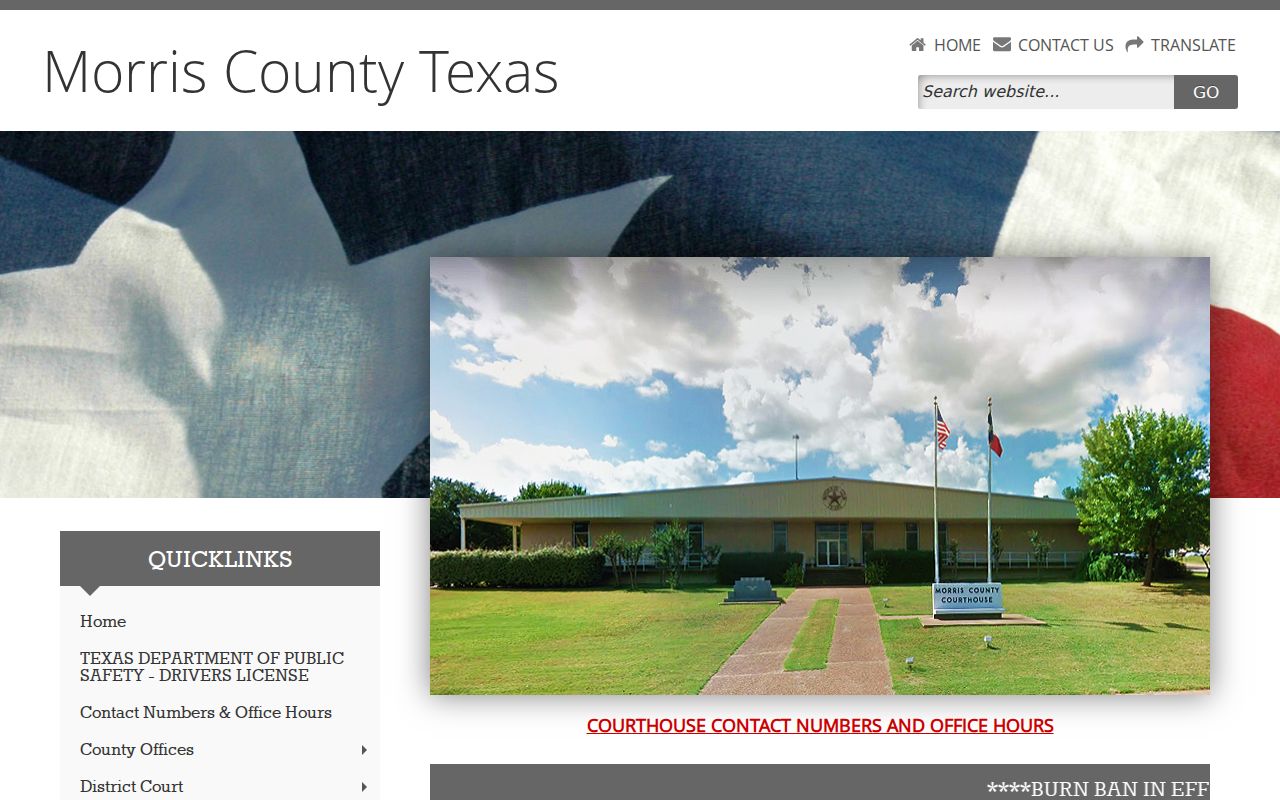
Even with one central county directory, the record type still controls which office can answer or certify it.
Official Texas Background Checks
The Texas DPS Criminal History Conviction Name Search is a statewide public product. It returns convictions and deferred adjudications that reporting agencies have submitted. It is broader than a Morris County case search, yet narrower than a person's full fingerprint-linked Computerized Criminal History record. Name matching can create false matches or miss a record, so a full date of birth helps narrow a search but does not prove identity.
For review of your own Texas record, DPS directs applicants to Fingerprint Applicant Services of Texas through IdentoGO. The research did not verify a permanent enrollment site inside Morris County. Search the booking locator by the Daingerfield ZIP code and use the offered location rather than relying on an assumed address.
| Official product | Published base cost | Identity method |
|---|---|---|
| DPS online public name search | $1 credit per search, plus card fees | Name and optional birth date |
| DPS offline name check | $10 | Name |
| DPS/FAST personal review | $15 check plus $10 collection | Fingerprints |
| FAST hard cards only | $20 for two cards | Fingerprints, no record result |
| FBI Identity History Summary | $18 plus possible collection fee | Fingerprints |
Morris County DPS Search Limits
DPS begins with a person's name and can broaden the match. The DPS search instructions explain that the system tries combinations with and without a middle name and may compare the month and day of birth. The first submitted search costs one credit. Opening more than one resulting rap sheet after that initial query does not spend another credit.
| Field | Required | How it affects the search |
|---|---|---|
| Last name | Yes | DPS can broaden similar-sounding results |
| First name | Yes | Used with the last name for the first pass |
| Middle name | No | The system also tries the search without it |
| Date of birth | No | A full date narrows likely matches |
| Exact match | No | Can narrow spelling but does not establish identity |
The official DPS help screen shows both the credit model and the matching cautions.

Save or print the result when it matters. DPS keeps search history information, not a permanent copy of every returned page, for three years.
Types of Criminal Records
A Morris County arrest can produce several related records. The arresting agency writes an incident or arrest report. The jail creates a booking file. A prosecutor may later file a complaint, information, or indictment, and the clerk then opens the court case. DPS receives qualifying fingerprint and disposition reports. None is a substitute for all the others.
- Incident or arrest report: the creating agency's account of the event and initial allegations.
- Booking record: Morris County Jail intake, bond, holding charge, and custody data.
- Court case file: the filed charge, docket, motions, plea, judgment, sentence, and costs.
- CCH entry: the state compilation of submitted arrest cycles and court outcomes.
- Custody or supervision record: jail, TDCJ, probation, or parole status kept by the responsible agency.
Warrant, registry, and restricted records have their own access rules. A warrant may be sealed, a juvenile matter may be confidential, and a nondisclosure order limits public release without erasing all authorized access.
Morris County Booking Records Begin
The Morris County Sheriff and Jail at 502 Union Street is the practical phone and counter for local booking custody. The county does not publish a verified jail roster or booking blotter. Instead, the sheriff's official page links to VINELink and provides the direct jail number. VINELink can help with custody status and notifications, but it is not a complete Morris County criminal history.
A caller should provide a full name and likely booking date. For the booking sheet or arrest report itself, ask which written Texas Public Information Act delivery address the sheriff currently designates. That written route matters because the public sheriff page does not supply a separate online records-request form.
Initial holding charges can change. The prosecutor may reject, amend, or reclassify a charge, and the final outcome belongs in the court file. The detailed Morris County arrest history route explains each custody and report channel without republishing names or booking photos.
What a Morris County Criminal Record Shows
The fields depend on the source. A public CCH result is organized around the person and reported arrest cycles. A Morris County case file is organized around a cause number and court events. Booking data focuses on intake and custody. Check the source label before drawing a conclusion from any field.
| Name and identifiers | Names, aliases, birth data, and state or FBI identifiers when included by law. |
|---|---|
| Arrest and booking | Date, agency, arrest tracking number, initial charges, bond, and custody status. |
| Charges and statutes | Alleged offense, grade, charging instrument, and cited Texas law. |
| Disposition | Dismissal, acquittal, conviction, deferred adjudication, no-bill, or pending status. |
| Sentence | Confinement, fine, restitution, or community supervision ordered by the court. |
| Later status | Custody, probation, parole, revocation, or release events reported by the responsible office. |
A charge is an allegation. A disposition states what happened to that charge. When a state summary has a blank or delayed outcome, the Morris County clerk's judgment is the better source for the local case result.
Three Morris County Custody Searches
Custody searches divide by the agency holding the person. Morris County Jail covers local pretrial and short-term custody. The TDCJ Online Inmate Search covers sentenced people in Texas prison custody, not people held only at the county jail. The Federal Bureau of Prisons locator covers federal prisoners. A federal court record itself is found through PACER rather than the prison locator.
The FBI electronic Identity History Summary portal serves a different purpose: a person can request their own fingerprint-based FBI history. Its official interface illustrates why identity-history review is separate from a local Morris County custody lookup.

For federal court dockets, PACER provides account-based access and the Eastern District of Texas is the relevant federal district. The PACER interface is a court-record path, not a state or county rap sheet.
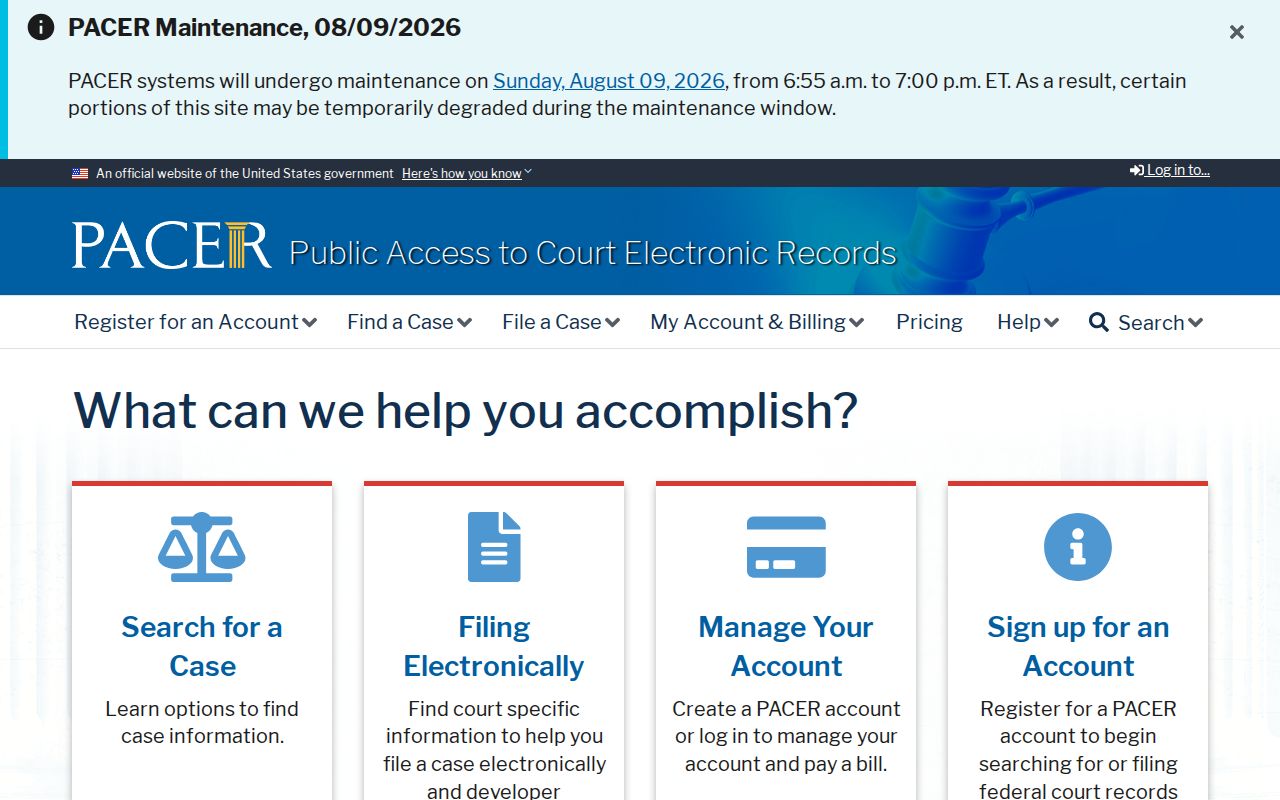
Search the system that holds the present record, then return to the Morris County clerk for a local judgment or disposition.
Public Access Laws
The Texas Public Information Act governs many executive-agency records held by the Morris County sheriff and city police. A written request triggers the Act. Court records also follow judicial access rules and clerk procedures, so a request for a filed case should go straight to the proper clerk. Confidential law can override the general right of access, and active law-enforcement material may be withheld while basic offense information receives different treatment.
Key Texas laws:
Government Code sections 552.021 and 552.108 grant access to public information while allowing specified law-enforcement exceptions.
Government Code sections 411.083 and 411.135 limit CHRI release but authorize the DPS public conviction product.
Code of Criminal Procedure Chapter 55A sets Texas expunction rules.
Code of Criminal Procedure article 62.005 makes most registry data public while protecting specified information.
The Texas Attorney General's requestor guidance says information must be produced promptly. If a government body seeks to withhold material, it generally asks for an Attorney General ruling within ten business days.
Morris County Written Record Requests
The sheriff does not publish a named records division, an online request portal, a copy tariff, or a local clearance-letter product. Route a request to Sheriff Jack Martin at 502 Union Street, fax (903) 645-4443, or jmartin@co.morris.tx.us, but first ask which address is designated for written TPIA requests. Describe an existing record rather than asking the agency to answer a broad question.
Include the incident number when known, event date and place, involved names, booking date, and the exact item sought. State whether inspection or electronic delivery is acceptable and request an estimate before costs exceed a chosen ceiling. Body-camera requests need the date and approximate time, specific location, and at least one known subject. Court case records belong with the Morris County clerk, not in a sheriff request.
Note: The sheriff office page lists (903) 645-2232, while the countywide directory shows 645-2322, so confirm the direct line before relying on it.
Sealed, Expunged & Restricted
Texas expunction and nondisclosure do different work. An expunction under Chapter 55A can direct listed agencies to destroy or return covered records. An order of nondisclosure generally blocks public dissemination of qualifying criminal history while authorized government access remains. Eligibility is fact-specific and can turn on every charge from the arrest, the indictment history, waiting periods, and the final result.
For a Morris County filing, start with District Clerk Gwen Ashworth in Suite J and ask for the current filing fee, required copies, cause-number practice, and hearing process. No county petition packet or set expunction fee was published in the inspected research. After an order, keep a certified copy, confirm that it reached each named agency, allow processing time, and use a DPS fingerprint-based personal review if the record still appears.
- Expunction
- A Texas order that directs covered records to be destroyed or returned.
- Nondisclosure
- A Texas order that limits public release while leaving some authorized access intact.
- Deferred adjudication
- A plea or finding held without a final conviction while court supervision is completed.
- No-bill
- A grand jury decision not to approve the proposed felony indictment.
Morris County Supervision Records
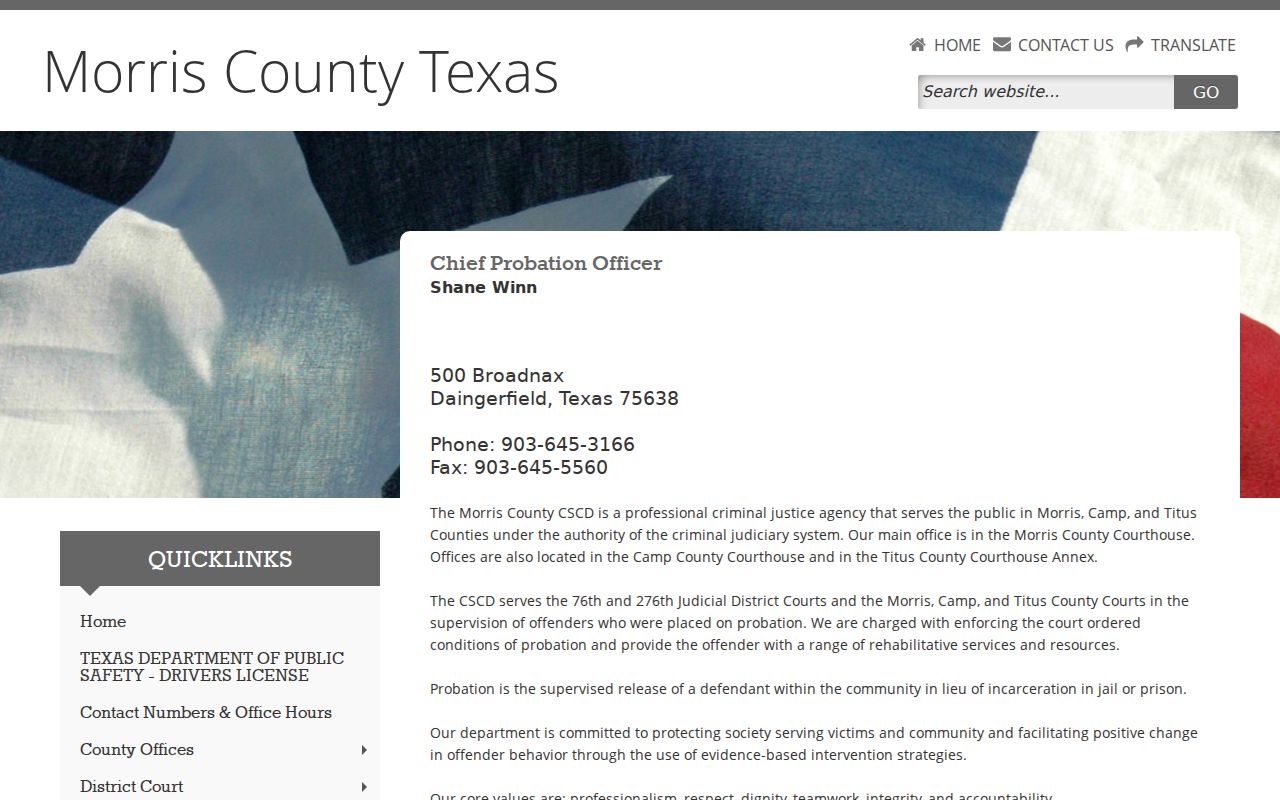
Morris County Community Supervision and Corrections Department operates from the courthouse and serves the 76th and 276th District Courts plus the Morris, Camp, and Titus County Courts. Its operational supervision file is not the same as the public judgment. The sentencing order and any motion to revoke appear in the court case, while the CSCD manages day-to-day county community supervision.
The Morris County probation page lists Chief Shane Winn and the local phone. That official page provides the direct route for a person handling their own supervision duties.
Parole is separate. The Texas Board of Pardons and Paroles makes release decisions, and the TDCJ Parole Division supervises releasees. Morris County is assigned to the Mount Pleasant District Parole Office.
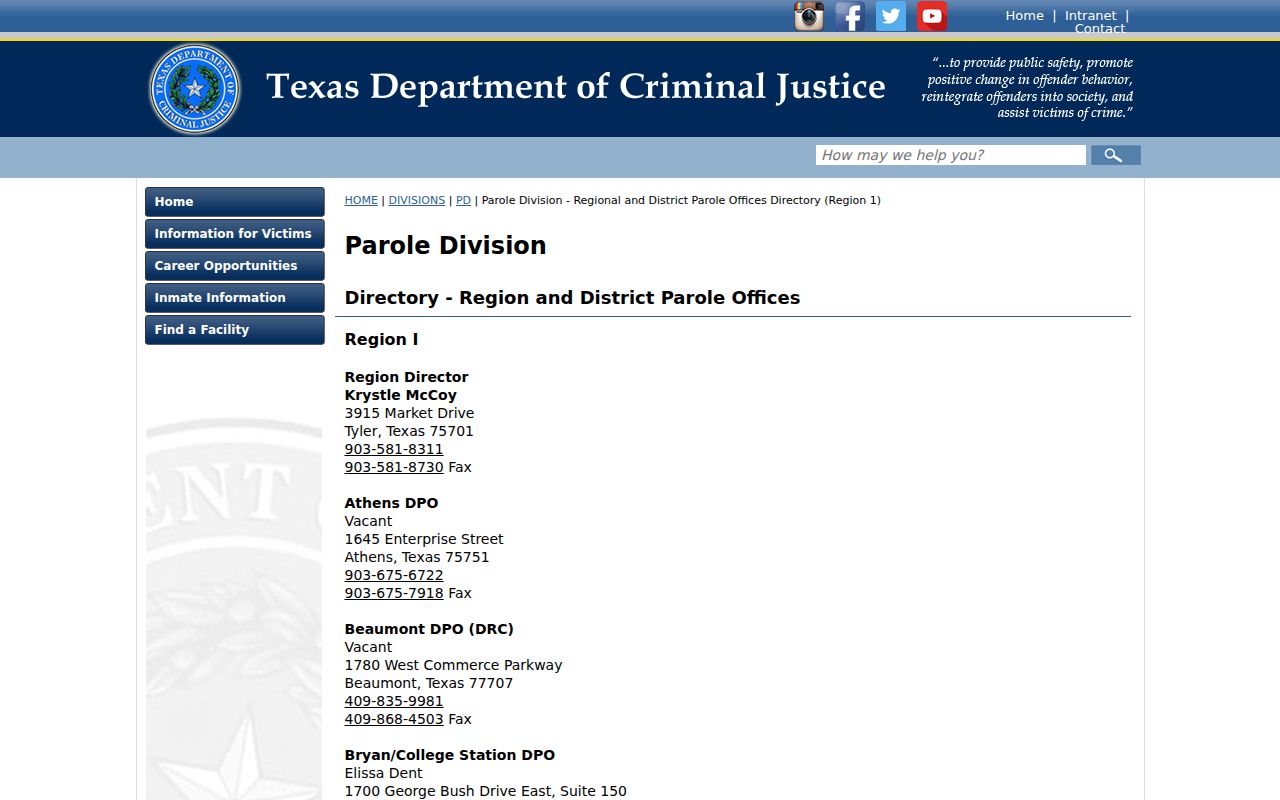
A Morris County criminal record may show the sentence or revocation event, but current supervision questions belong with the office that manages the person.
Morris County Records Reach DPS
A qualifying custodial arrest starts a reporting chain. The arresting agency takes fingerprints and submits an arrest tracking number to the DPS Computerized Criminal History system. A prosecutor chooses whether and what to file. The Morris County Clerk reports Class A and B misdemeanor outcomes, while the District Clerk records felony events from the 76th and 276th District Courts. Courts, prosecutors, custody agencies, and probation offices then submit later disposition and sentence events.
The Texas DPS conviction search displays the public portion of those reported results.
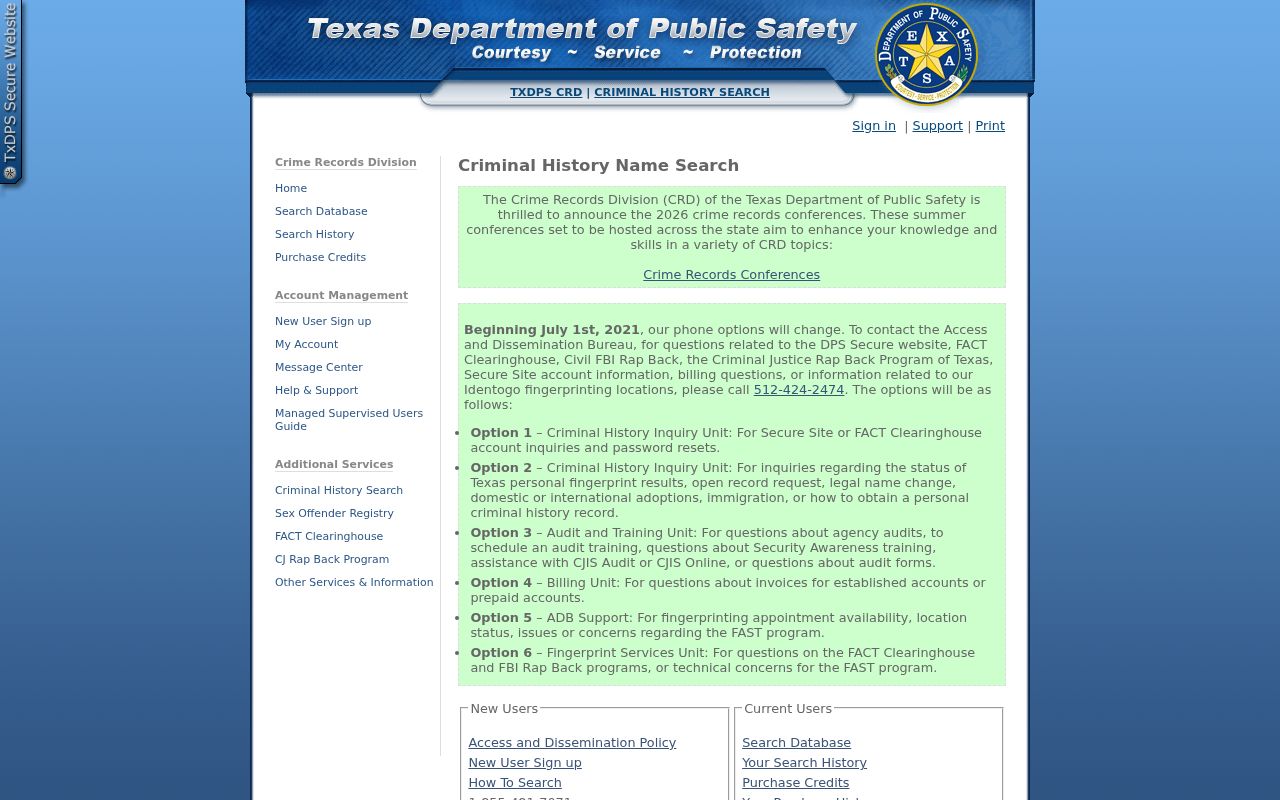
Reporting can lag or remain incomplete. A Morris County arrest may appear before a court disposition, and charges may change between booking and filing. When the statewide summary and local docket differ, confirm the filed outcome with the clerk and use fingerprint review to resolve an identity mismatch.
Morris County Warrant Record Paths
No public Morris County active-warrant database was verified. A warrant is a court command, while law enforcement executes and tracks it. Call the sheriff for its current process, and contact the issuing clerk about a court capias or bench warrant tied to your own case. Sealed warrants are not public, and a resolved warrant can take time to clear from downstream systems.
Texas Crime Information Center warrant data is for law enforcement use rather than a general public search. Fine-only city warrants remain with the issuing municipal court. Daingerfield Municipal Court warns that missed obligations can lead to a warrant and added cost. Anyone who learns of a possible active warrant should address it with the issuing court or a licensed Texas lawyer, not rely on a name-search result.
Criminal Records by City in Morris County
Place names do not always identify the record custodian. An event inside Daingerfield, Lone Star, or Naples may involve city police, a sheriff's deputy, a constable, or a DPS trooper. City pages focus on the first local contact, municipal case route, and the handoff to Morris County courts and Texas DPS.
Daingerfield Criminal History
Police records, written city requests, and the municipal court at 101 Linda Drive.
Lone Star Criminal History
A procedural route for a city with no verified public records portal or blotter.
Naples Criminal History
City Hall and municipal judge contacts, with police calls routed through the sheriff number.
For any city, verify the arresting agency first. Then move from the creating agency to Morris County Jail, the proper clerk, and the state repository only as the record develops.